
Back to blogBooks
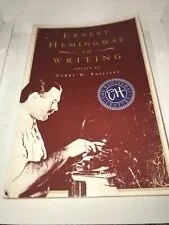
Summary of Ernest Hemingway on Writing by Larry W. Phillips - Book Summary
by Deepak Shukla3 min read
DS
I'm Deepak Shukla, a British-Indian founder based in Piedmont, Italy. These are my personal essays and reviews.


 Deepak Shukla’s Notes On Ernest Hemingway on Writing by Larry W. Phillips:
Hey guys,
I finished reading this book on the 10th of January 2021.
Here’s a synopsis of the book I grabbed from Amazon:
“An assemblage of reflections on the nature of writing and the writer from one the greatest American writers of the twentieth century. Throughout Hemingway’s career as a writer, he maintained that it was bad luck to talk about writing—that it takes off “whatever butterflies have on their wings and the arrangement of hawk’s feathers if you show it or talk about it.”
And here are my actual notes I took whilst I was listening to this on Audible:
Deepak Shukla’s Notes On Ernest Hemingway on Writing by Larry W. Phillips:
Hey guys,
I finished reading this book on the 10th of January 2021.
Here’s a synopsis of the book I grabbed from Amazon:
“An assemblage of reflections on the nature of writing and the writer from one the greatest American writers of the twentieth century. Throughout Hemingway’s career as a writer, he maintained that it was bad luck to talk about writing—that it takes off “whatever butterflies have on their wings and the arrangement of hawk’s feathers if you show it or talk about it.”
And here are my actual notes I took whilst I was listening to this on Audible:
- Anytime I write a good blog, it means I'm not working because there is heat left in the oven from writing.
- Write not for notoriety but write for the beauty of writing.
- When writing, think about writing for the success that comes after you die.
- Do not be deceived by writing in what's in fashion now, as writing should be timeless.
- Try and compete with the proven great writers and no one else.
- The more you cut, the better it is (books you read)
- Write genuinely, and if you include people in your stories, then write about them precisely as they are
- Writing in pencil allows you to make it 0.3x better as you need to type it up.
- Ordinarily, I never read before I write anything in the morning so as I'm not influenced.
- Once you finish the first draft, give it 2-3 months, then return and finish it off. In the meanwhile, write another book.
- You need to go on when it's at its worst, and you need just to go on straight through and finish the damn thing.
- Write as well as you can and finish what you start.
- This way, you keep it reasonable as you write.
- Every week also read it from the start correcting along the way
- Read it all every day from the start correcting it all before you start, and then when it gets too long to correct it, just read the few chapters before
- After writing a story, I was both sad and happy, like I'd just made love, and I would not know honestly how good it was until I read it the next day.
- Never empty your well of writing but stop when something is left in the deep well to refill it overnight and go again the day after
- The hard part about a novel is to finish it.
- If you are writing something and it's going good, and you know where it's going, then stop.
- After I finish writing the book, I am emotionally exhausted-as should you be
- Dictionaries are a gift. Study them
- You need to show you can do it, well, all on your own, before using any other tools.
- You can learn all the tricks, but then you still need to write excellently. Making is very different from describing-making is very difficult to do
- You need to not just depict something as alive but to get the actual feeling across so you actually feel it.
- The best books will always be those borne of experience.
- Irreplaceable experiences will allow you to channel excellent writing, such as experiences of war.
- Writing can be pleasurable and that you will always return to if you were born to write.
- Sometimes reading some of your old work can help convince you that you have ever written at all.
- Write for yourself and then the person you truly love
- Imagination is enormous as well.
- Good writing is accurate writing - it'll be true in proportion to the amount of knowledge he has
- You must be able to make the reader live the experience with you.
- If you write well enough - your writing will be read hundreds of years later
Field Notes: stories on doing hard things
New stories from ultras, selection prep, fight camps and building a business, when they're written. No schedule, no spam, unsubscribe any time.
By subscribing you agree to occasional emails. See the privacy policy.
I also run Pearl Lemon. If you need help with search, here's how I help with SEO consulting in London.