
How to Find Hidden SEO Keywords in Five Minutes
 Not sure how effective this blog is going to be because I’m violating all the rules I normally live by when I produce this content.
It’s the afternoon and I don’t have the ticking sound and I’m listening to Wretch 32 in the background instead of white noise lol:
 But who cares – I’m on holiday.
Yup, I’m a workaholic I guess but who cares I love it.
I find the term workaholic odd in general. I think I’m going to stop using it.
It’s just more a case of finding something that you love and then wanting to do it all the damn time.
So anyway….
This is not dissimilar to the blog about how to generate £25,000 in new business enquiries per month in terms of identifying keywords – so do look at that first.
But I want to extend this a little bit further.
With this ghetto guide on how to pump out new pages for your website that can rank for buying keywords fast –
Let’s keep it straightforward.
If you’re in the services business – e.g insurance let’s say…well the short story is that there’s going to be a BUNCH of keywords you can rank for (assuming you’re full-service insurance) that you can try and get to page 1 top 1-5 of Google relatively quickly with not too much effort.
Here’s what you need:
- A badass copywriter who knows how to write copy that converts and landing pages that are better than whatever the competition put together
- An active subscription with Ahrefs and SEMRush
- An ability to do simple keyword research using Ahrefs and SEMRush
- An SEO team who can help you build links to the content
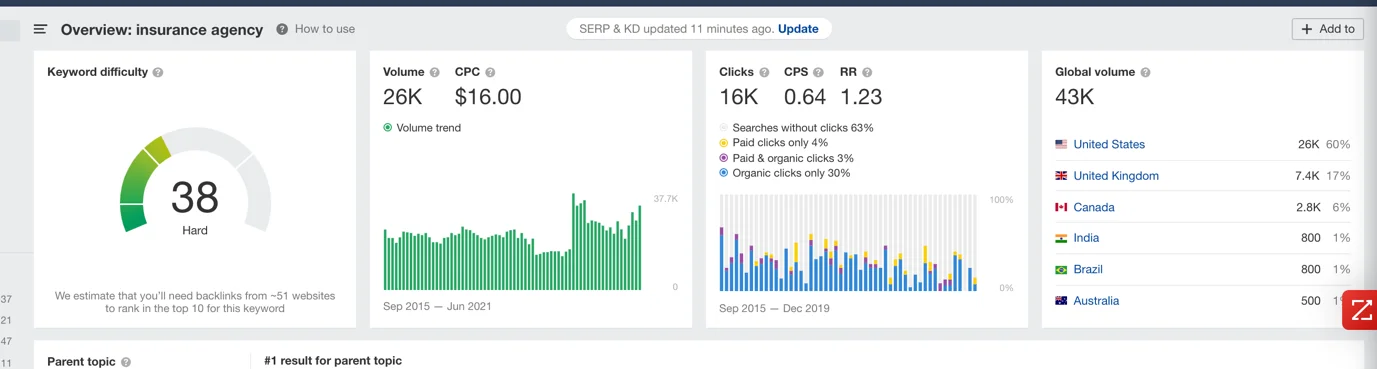 Insurance agency.
Once you’ve done that you need to go to the next layer which is:
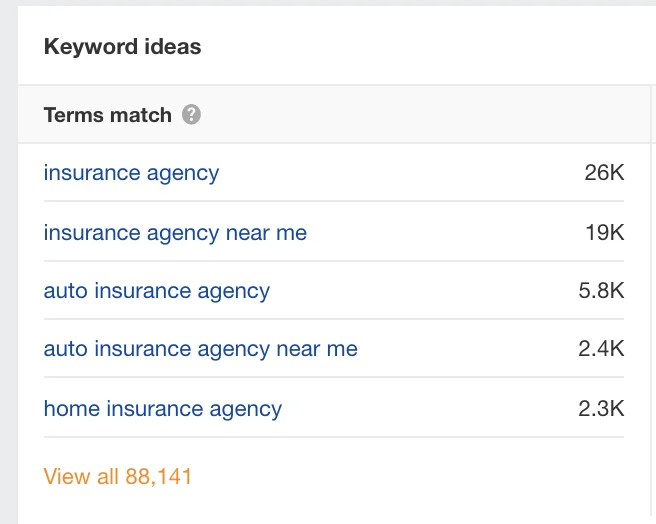 Looking at the keyword ideas.
Once you’re in here you can then see what this loads up:
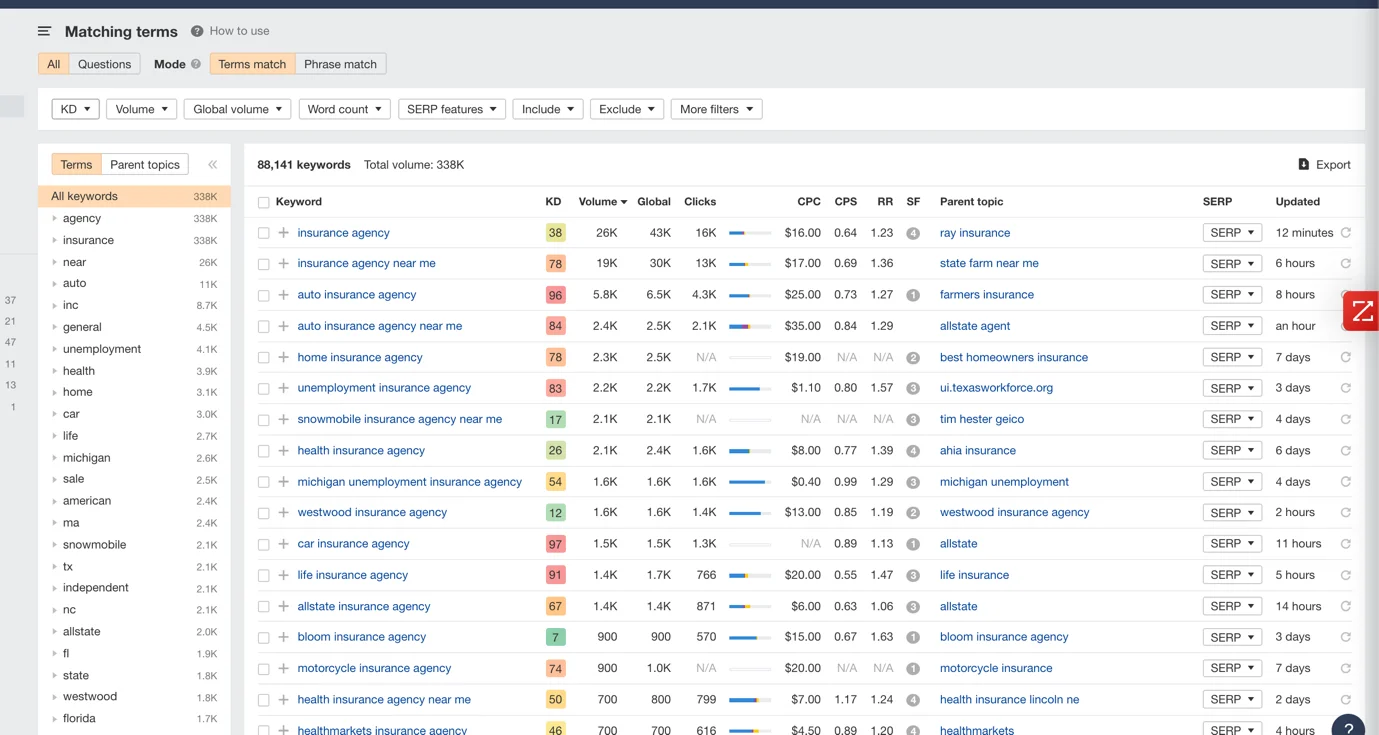 Now you want to make the 1 change that can really impact the keywords you can write for when it comes to your website:
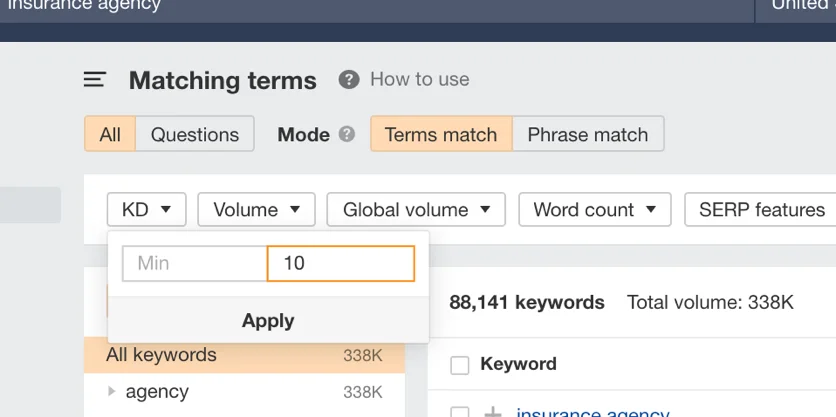 If you look at the keyword difficulty (how difficult Ahrefs thinks it’ll be to rank that keyword on page 1 of Google) – you want to set it to at least HALF of whatever your domain rating is.
So e.g for Pearl Lemon Accountants our domain rating is 6. So we want to look at keywords that have a difficulty of 3 or less.
 However – if you intend to keep working to improve the SEO of your own website (thereby assuming that the 6 listed above will in time rise to 26 as an example) – then you can set the bar higher.
To be safe – I always go for ‘10’ as a good round number to work with:
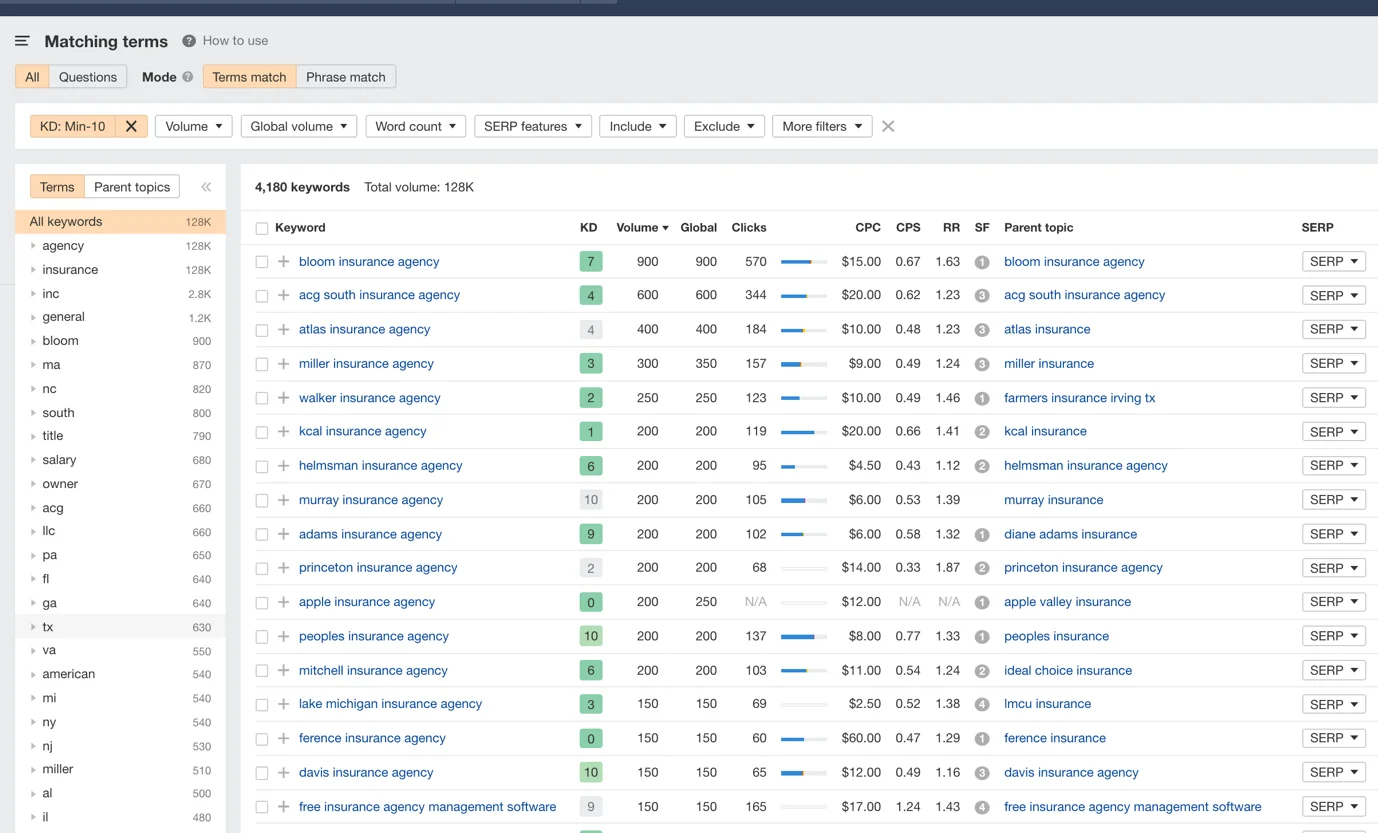 Now all of a sudden you’ve got 4,180 keywords that have a difficulty of 10 or less that have been categorized in the Ahrefs database.
Now – we need to narrow it further –
From what we can see above I can already notice two things:
There are many actual agencies here rather than agency services.
e.g:
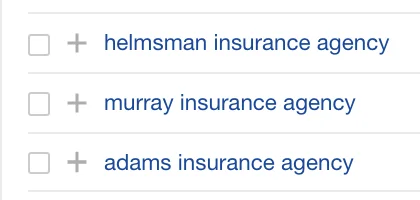 These are the names of three insurance agencies rather than actual services – so let’s narrow the field somemore:
 I’ve now set a minimum of ‘50’ which has removed around 85% of the keywords (there’s probably some gold in there as well)
Given we’ve still got 660 – let’s make the keyword difficulty EVEN easier:
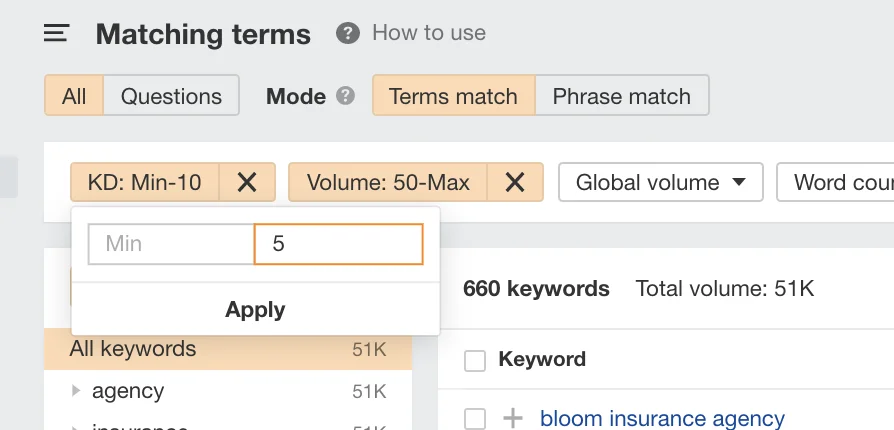 Let’s set the max difficulty to ‘5’ and see what happens:
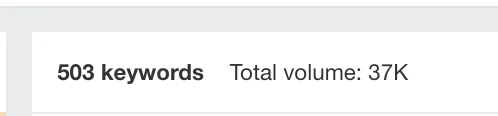 Still on 503.
But now it’s not impossible to visually check to see what ‘gold’ we identify by going page by page:
 To see if we land anything useful:
Ok, I searched for a total of 2-3 minutes and here’s what I found:
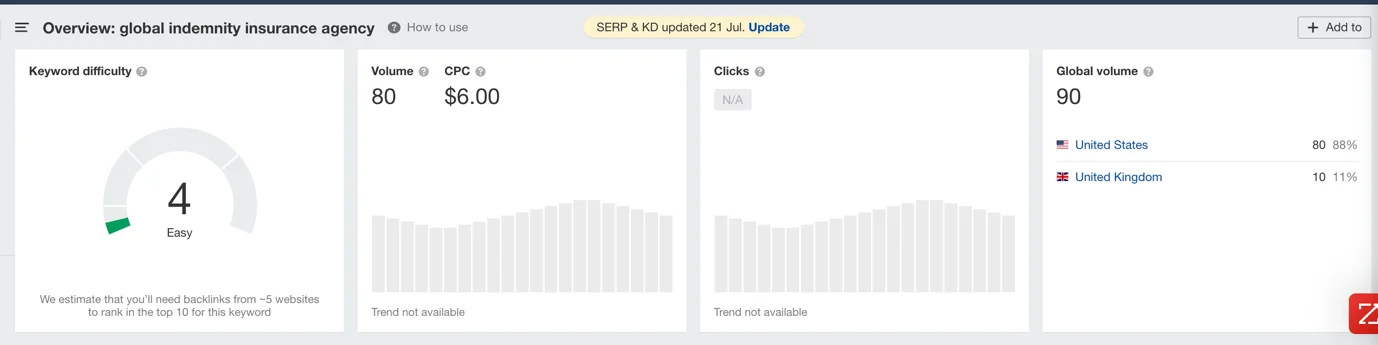
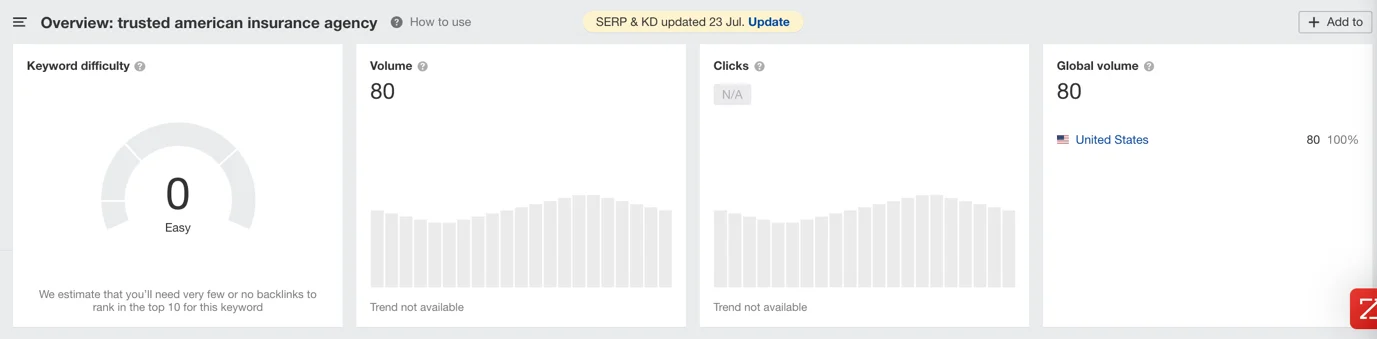
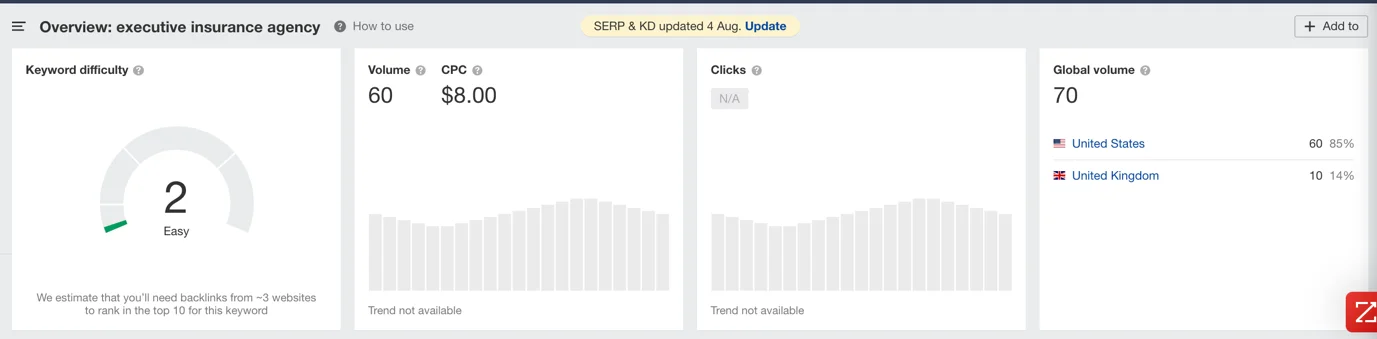
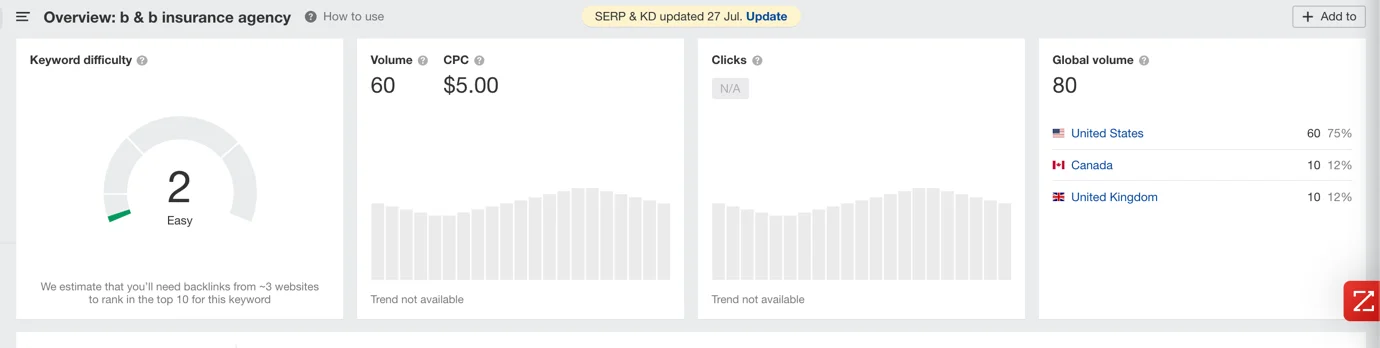
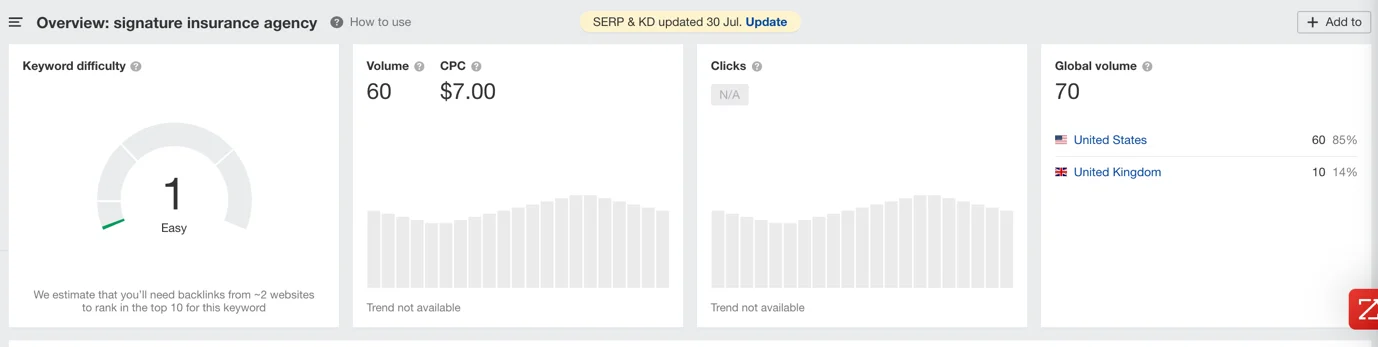
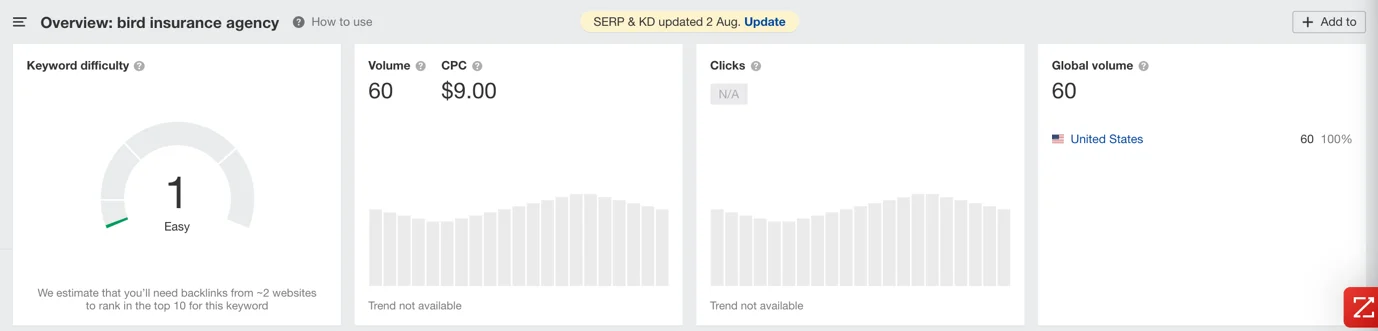
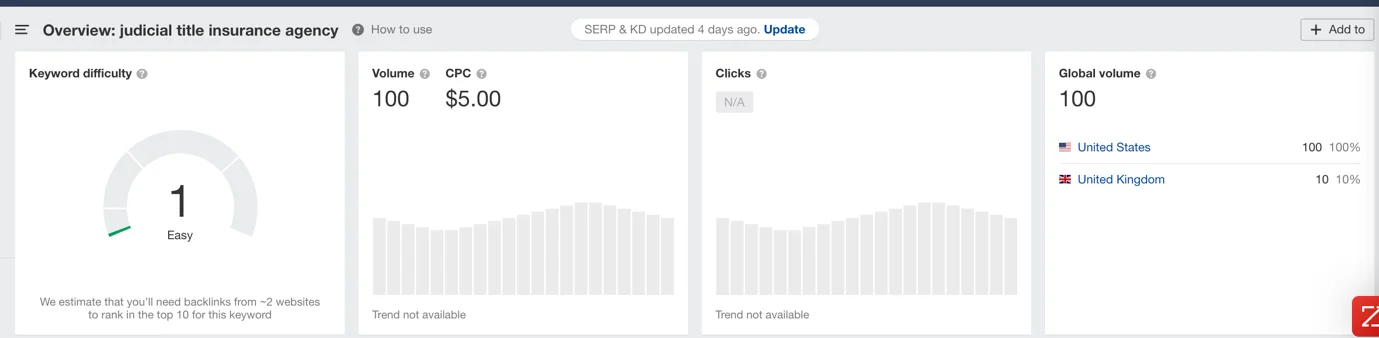 Over 50% of these might be actual agencies rather than the type of service we’re referring to above.
However – I think you understand the principle now.
Let’s take the ‘b&b insurance agency’ and see what comes up when we Google:
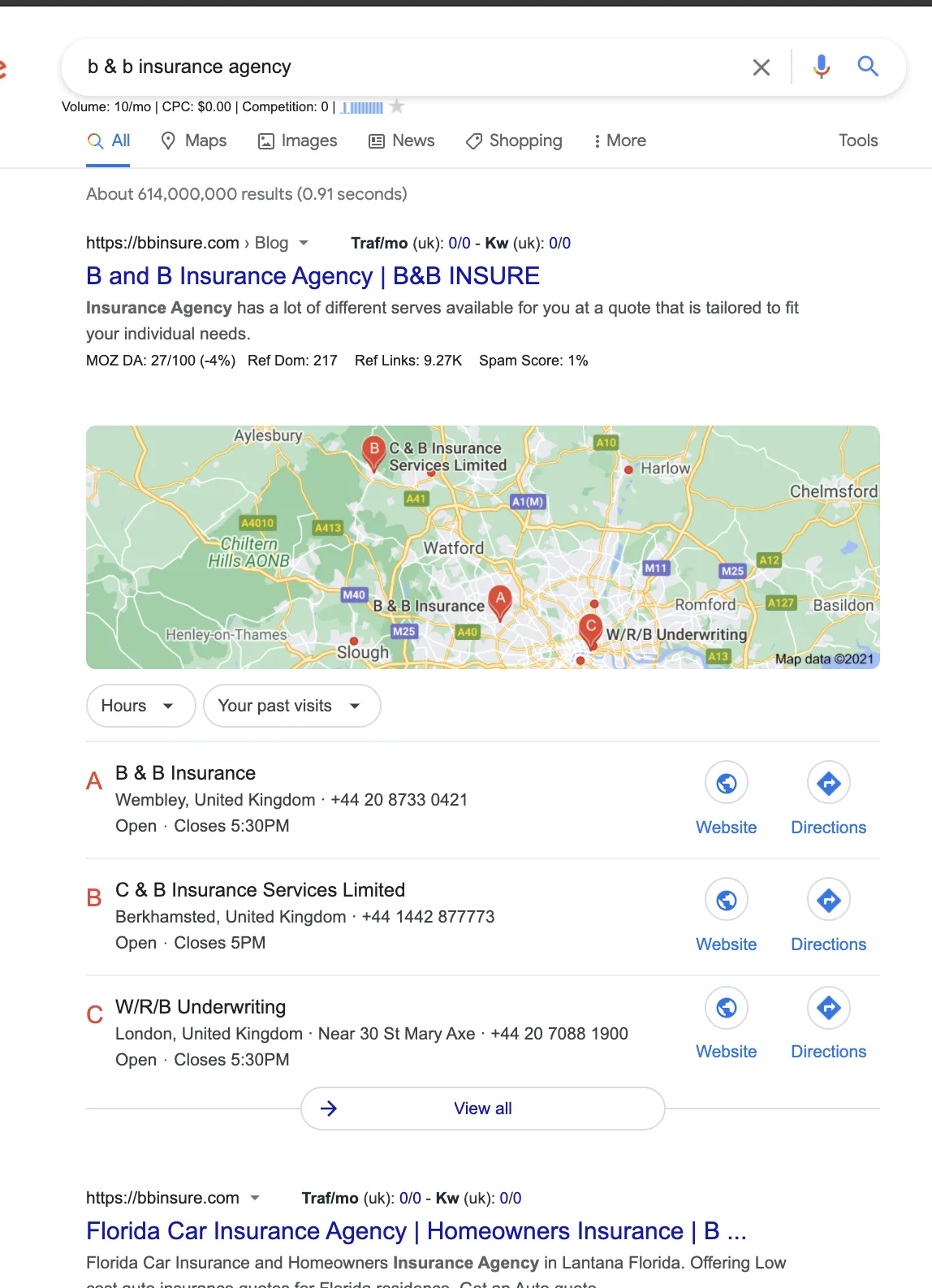 Now we’d look at the top 3 listings underneath Google maps:
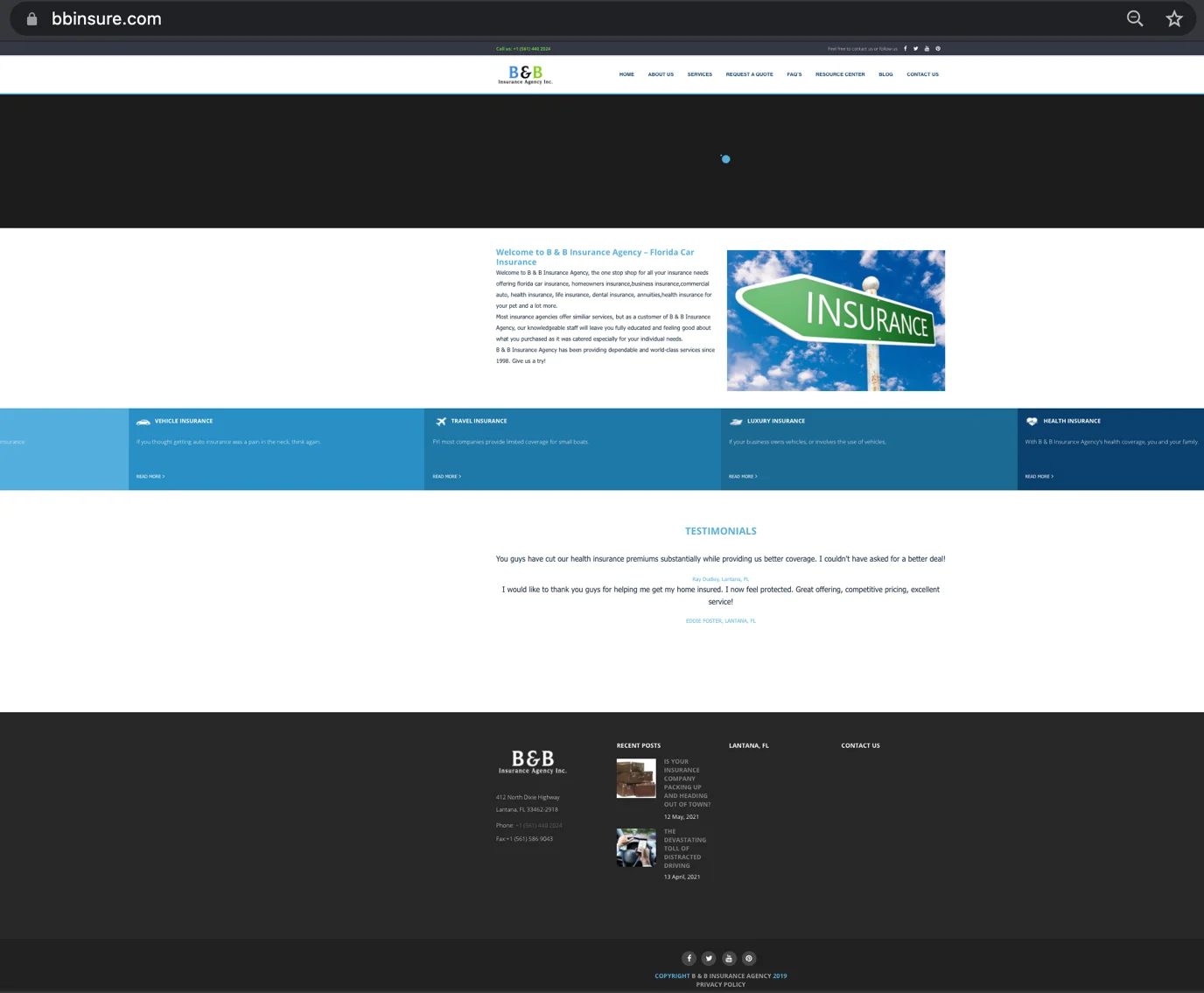 This is #1 on Google and is a page <300 words.
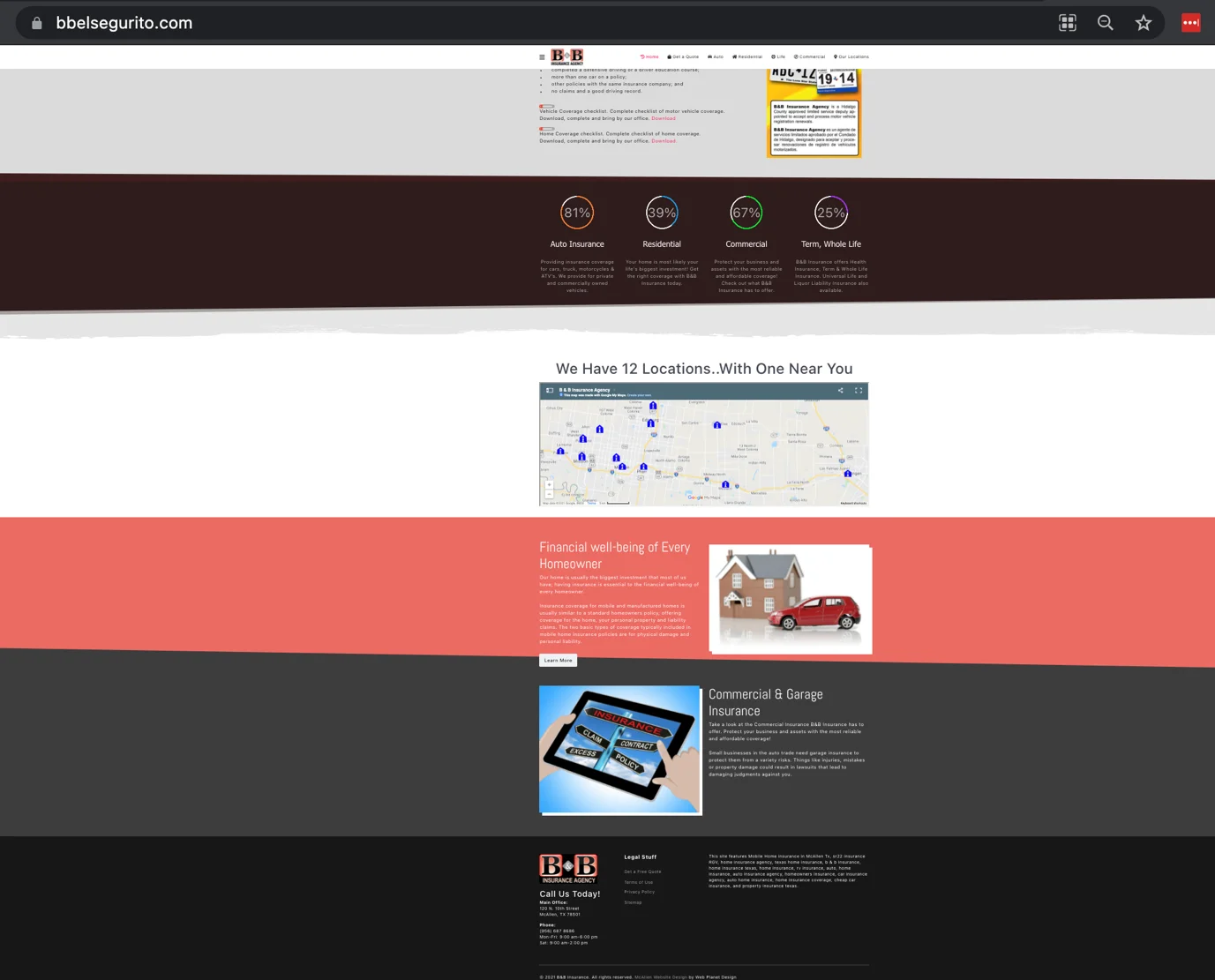 This is #2 and is a little better but not still crazy.
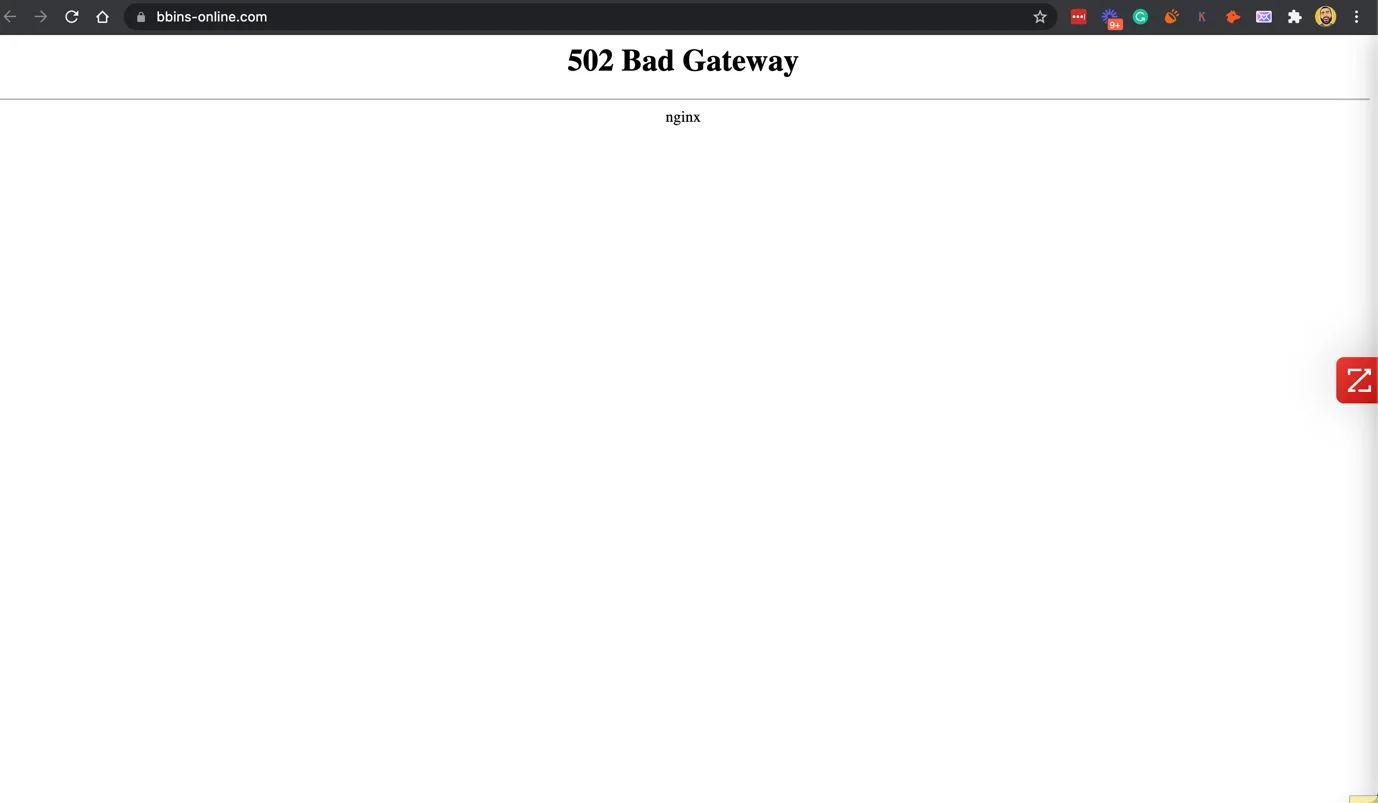 #3 doesn’t even work.
So your goal would then be to write content that’s much much better than anything on page 1 of Google (which doesn’t look too difficult from what we see here).
Combine this with link building and off you go….
You have now discovered ‘hidden keywords’ you can rank on your website that could well be buying keywords that could generate you $25,000 in new business EACH per year :P
November 2026: I would now start with Search Console
I still like the original 2021 post above. I was on holiday, listening to Wretch 32 and getting rather excited about keyword-tool filters. That was me, and I'm not going to tidy it into a bland textbook. But there's something important missing from the old method: what if Google is already showing your pages for searches you haven't properly noticed?
These days I tend to ask the team to open Google Search Console before we go shopping for more keyword data. In one July 2026 discussion I was pushing for a quick look at the last three months of real site performance, one site at a time. You can spend hours arguing about keyword difficulty and still miss an older article that has started collecting impressions.
My low-cost way to find the next page to improve
- Look at three months of impressions and clicks. I want to see the direction of travel, not just a keyword tool's estimate. Compare a recent period with the preceding one of the same length.
- Find pages with some visibility but very few clicks. A page appearing for 50 or 100 relevant searches is worth a look, especially if it is increasing. It is a lead for investigation, not proof it deserves another thousand words.
- Open the page and read it like a stranger. Does the first screen answer what the searcher asked? Is the example painfully dated? Am I repeating the same generic advice as everybody else? Can I add a real example from the work, something I tried, or a mistake I made?
- Check the actual search results. If Google is showing shopping pages and I have written a diary, I have an intent problem. If other pages answer three follow-up questions and mine answers one, I may simply have a content problem.
- Improve the existing URL before manufacturing ten new ones. Keep the good original writing, give readers the missing explanation and link to genuinely relevant material. Then watch what Google does across subsequent settled weeks.
There are two traps here. Firstly, Search Console withholds some query detail, so the visible query list is not the entire story. Secondly, a URL with a trailing slash and the same URL without one can make your spreadsheet look as if a winner disappeared overnight. Check the real page and its canonical before calling something a loss or creating a duplicate.
Ahrefs and Semrush still have their uses. They are good for finding demand your site hasn't met yet. But for discovering an underused page on a site you already own, the free evidence is often sitting in front of you. My older Medium ranking experiment is another example of why I would check the current result rather than trust a screenshot from years ago.
Want me to look at your site?
Send me your URL and the one thing you'd most like to fix. I'll record a free 10-minute teardown of what I'd do first — no pitch.
Or read how I work on SEO consulting in London.