
From Deloitte tax consultant to rapper: why I left in my early twenties
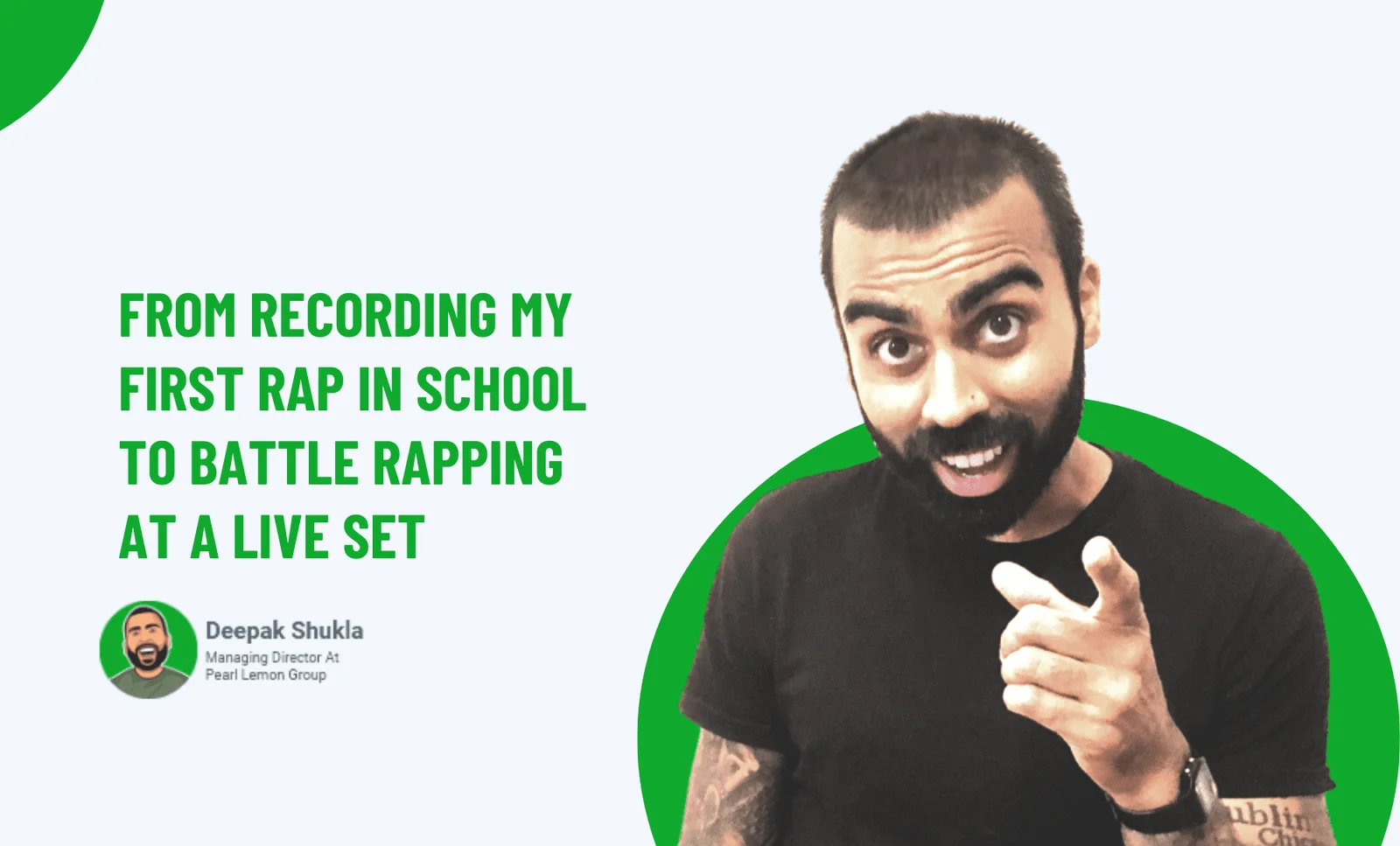
Around 2009 or 2010, in my early twenties, I walked into a partner's office at Deloitte and resigned from a graduate tax consultant role. I wanted to be a rapper, and I was going to build a recording studio to pay for it. I was born in August 1986, so I was 23 or 24 at the time; some earlier drafts on this site said 22, which was wrong. When I told the story on Joseph Liu's podcast in 2018, my own words were simply: "Deloitte was in 2009 or '10." I have kept that uncertainty rather than inventing a precise date.
This page is the career-pivot story: the job, the decision, what it cost and what it turned into. The music itself is in the rap years; the origin story is in from my first rap in school to battle rapping.
The job
I had walked into the tax graduate programme at Deloitte. It was, as I put it later, what everyone around me perceived as success, especially as the son of Indian parents. Everyone was pleased. There was one problem, and I said it bluntly in the interview: "I was not a tax man. I had no interest really in tax, I discovered."
What I did enjoy was rapping. I had been doing it since I was about 15, with a group of friends from school who were not on the same academic track as me.
The resignation
I resigned during the recession. The partner I spoke to pointed out, reasonably, that I could go on to qualify as a chartered tax adviser. I said I wanted to go and be a rapper, and that I would start a recording studio.
I have described the physical feeling of that decision many times since, because it is the part people relate to: thinking "I'm going to quit Deloitte" and feeling your heart rate rise and the blood rush, a small fight-or-flight response. Every big decision I have made since, from applying to the Army Reserve to entering a 200-mile race, has felt a bit like that.
What came next: no money and a spare room
Leaving had an immediate cost. In the interview I said I "suddenly had no money", because whatever savings I had went into building the studio, and the studio had no income at first.
The studio was a room in my parents' house, next to my mum's kitchen. Musicians would come in through the back garden, past my mum cooking dal or chapatis, and into the booth. It became Deep Impakt Recordings. The detailed build, including the budget and kit, is in building Deep Impakt Recordings.
I knew nothing about running a studio. I read books on building a home recording studio on a tight budget and asked a couple of producers who had worked on my music to teach me the essential 20% of Logic Pro.
Changing identity, twice
The part of the conversation with Joseph that I still think about is identity. As a British Indian at Deloitte, I was culturally exactly where I was expected to be. Then I became a British Indian rapper, and people were always surprised. The validation I got turned out to come less from my own songs and more from recording other artists: "I definitely had more success as a recording engineer than I did as a recording musician."
Was it the right decision?
I never made it as an artist. But the studio was my first business. It taught me to find customers, deliver for them and earn referrals. Over those years I recorded around 150 songs and, by the description used on that podcast, worked with more than 200 clients. Those habits fed directly into the businesses I built later.
I would not tell anyone to quit a job on impulse. I would tell them that the cost of staying in the wrong career compounds too.
Lessons from the pivot
- Name the real reason. Mine was not "I hate tax"; it was that I wanted to make music.
- Have a way to earn. The studio was a business plan, even if a thin one.
- Learn fast from people who know. Books and producers taught me the essentials.
- Expect your identity to wobble. Other people's surprise is not your problem.
Questions readers ask
When did you leave Deloitte?
Around 2009 or 2010, by my own recollection in a 2018 interview. I was 23 or 24.
What did you do at Deloitte?
I was on the graduate programme as a tax consultant.
What happened after you left?
I built a home recording studio, Deep Impakt Recordings, recorded my own music and other artists, and recorded around 150 songs.
Sources and notes
- Creating Your New Image with Deepak Shukla, Joseph Liu podcast, December 2018 (full transcript)
- Join Up Dots podcast interview
- Deep Impakt: My Life as a Musician (YouTube playlist)
Quotations are from my own words in the published transcript.
Written in October 2026 from my own contemporaneous records.
Field Notes: stories on doing hard things
New stories from ultras, selection prep, fight camps and building a business, when they're written. No schedule, no spam, unsubscribe any time.
By subscribing you agree to occasional emails. See the privacy policy.
I also run Pearl Lemon. If you need help with search, here's how I help with SEO consulting in London.