
Cycling Bolivia's Death Road in 2009: my ride down the Yungas road
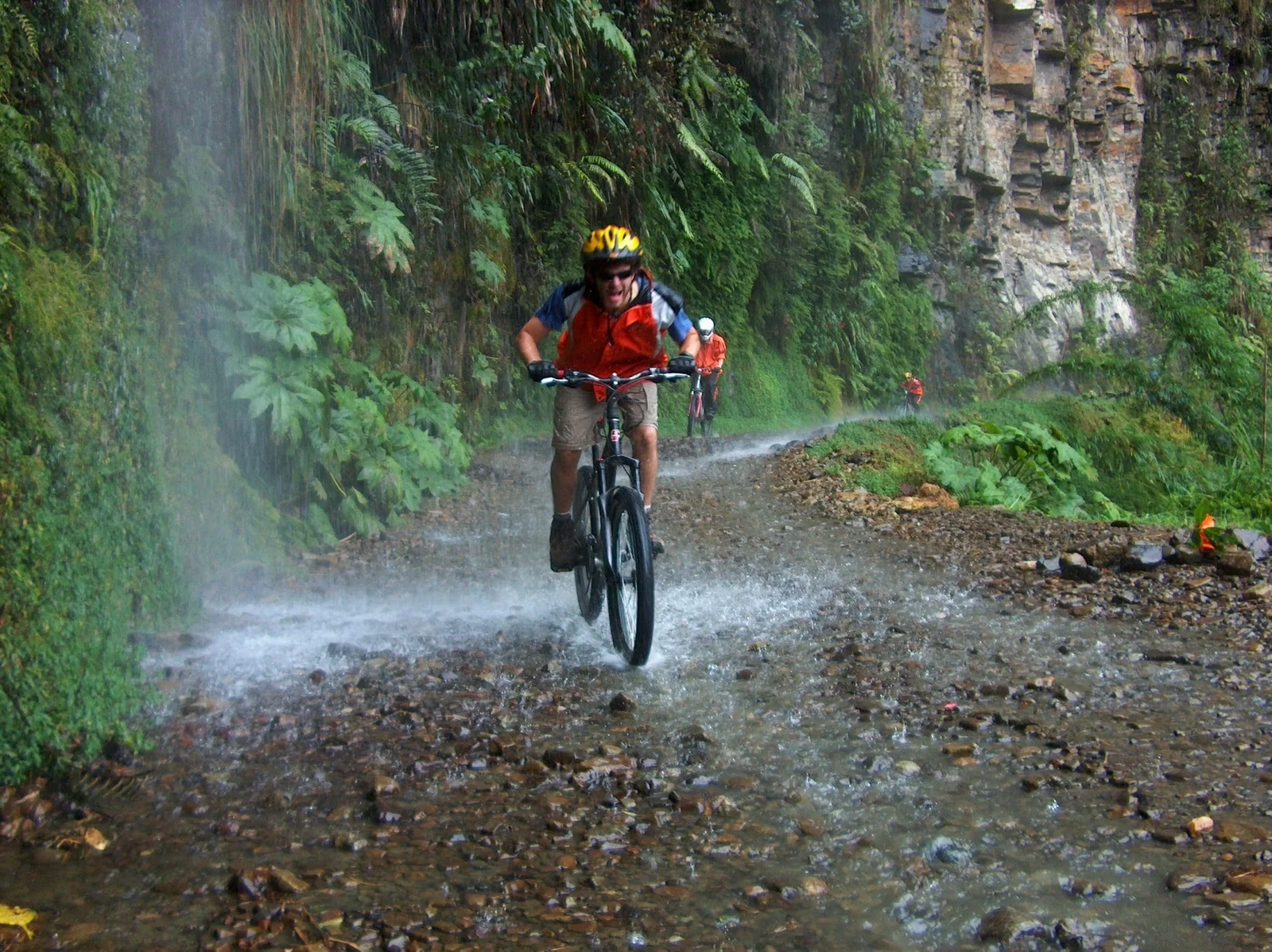
At the start of July 2009, a few hours out of La Paz, I rode a mountain bike down the North Yungas road, better known to backpackers as Bolivia's Death Road or "the World's Most Dangerous Road". I was 22, two months into a 92-day trip through South America, and this was my third bike descent of the trip. I survived it with one skid and a lot of dust.
This is a 2026 retelling of the diary I wrote at the time, with today's context added. One important line first: my experience is from 2009. It is not current safety information. If you are planning to ride it, the section near the end explains what to check now.
What the Death Road is
The road runs from the high Andes near La Paz down to the Yungas valleys around Coroico. It is narrow, mostly gravel, with a rock face on one side and long drops on the other. It earned its reputation as a vehicle route; since a newer road opened for most traffic, the old road has become a famous downhill ride for tour groups. My diary summed up the recipe for danger in one line: "narrow roads, gravel paths, a huge rock face on one side, and sheer drops the other."
Is it really that dangerous? My 2009 answer
I answered the question in my own post, and I still think the structure of the answer is right:
- With a good bike, an informative guide and regular stops: "no, not really."
- With a bad bike with shoddy brakes and a guide who gives little advice: "possibly."
- If you think you can fly down the hill, "especially when hungover": definitely.
The point is that the risk depends far more on equipment, guiding and behaviour than on bravery. That is as true now as it was then.
My ride
The group set off on good road at first, high up, before the surface turned to gravel. There were sections where we could pick up real speed and others where the guide slowed everyone down. We stopped regularly.
The skid
I skidded once. By my own description I "expertly used my right leg as leverage" as the bike slid towards the rock face rather than the drop, and came away embarrassed rather than hurt. It was the correct side to fall.
The competitive problem
My plan was to stay at the back. It did not last. I wrote that I kept being drawn nearer the front, and sometimes to it, because of a competitive streak I did not entirely endorse. That impulse to race other people is exactly what guides warn against on that road, and it is a pattern I would later recognise in my first marathon.
Fear and focus
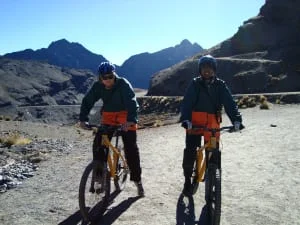
The line from my diary I like most is this one: "This trip is a mixture of fear and enjoyment at the same time, and being a first time death roader, you don't really have masses of time to enjoy the view." On a road like that your attention is on the next few metres of gravel.
Where the road leads: La Senda Verde
At the bottom of the ride is La Senda Verde, an animal refuge that has a long relationship with the bike tour companies. I ended up staying there as a volunteer for a while afterwards. That is its own story: La Senda Verde, Bolivia 2009.
Riding the Death Road in 2026: what to check
I have not ridden it since 2009, so I cannot tell you what conditions are like now. These are the questions my own ride taught me to ask:
- The bike. Ask about the bikes and brakes, and check them yourself before you start. Full-suspension and well-maintained disc brakes matter on gravel.
- The guide. Choose an operator with experienced guides, a support vehicle, first-aid capability and a clear safety briefing. Read recent independent reviews.
- Protective kit. A proper helmet, gloves and protective clothing should be standard.
- Your condition. Do not ride hungover, unwell or unacclimatised to altitude.
- Your ego. Ride at your own pace. Stay away from the edge.
- Insurance. Check that your travel insurance covers downhill mountain biking.
- Current advice. Read your government's current travel advice for Bolivia before you go, such as the UK Foreign Office page.
Where it sits in the trip
My 2009 route ran from Venezuela to Argentina. In Bolivia it went La Paz, the Death Road, La Senda Verde, Coroico, then on to Sucre, Potosí and the salt flats. The rest of that chapter is on the adventure travel page, including the bike-and-jungle route to Machu Picchu a few weeks earlier.
Questions readers ask
When did you cycle the Death Road?
Around the start of July 2009, during a 92-day backpacking trip through South America.
Did you crash on the Death Road?
I skidded once and caught myself on the rock-face side. I was not injured.
Is the Death Road safe to cycle now?
I cannot say from a 2009 ride. Use a reputable operator, check equipment and read current government travel advice.
Where does the Death Road ride end?
My ride ended near La Senda Verde, below the road, in the Yungas near Coroico.
Sources and notes
- My 2009 South America route
- Original 2009 diary: The World's Most Dangerous Road
- UK Foreign Office travel advice: Bolivia
Photographs are my own from 2009. Quotations are from my original diary entry. Safety notes are general prompts, not current conditions.
Written in October 2026 from my own contemporaneous records.
Field Notes: stories on doing hard things
New stories from ultras, selection prep, fight camps and building a business, when they're written. No schedule, no spam, unsubscribe any time.
By subscribing you agree to occasional emails. See the privacy policy.
I also run Pearl Lemon. If you need help with search, here's how I help with SEO consulting in London.