
Uyuni Salt Flats, Bolivia 2009: A 4x4 Trip and the Limits of My Spanish
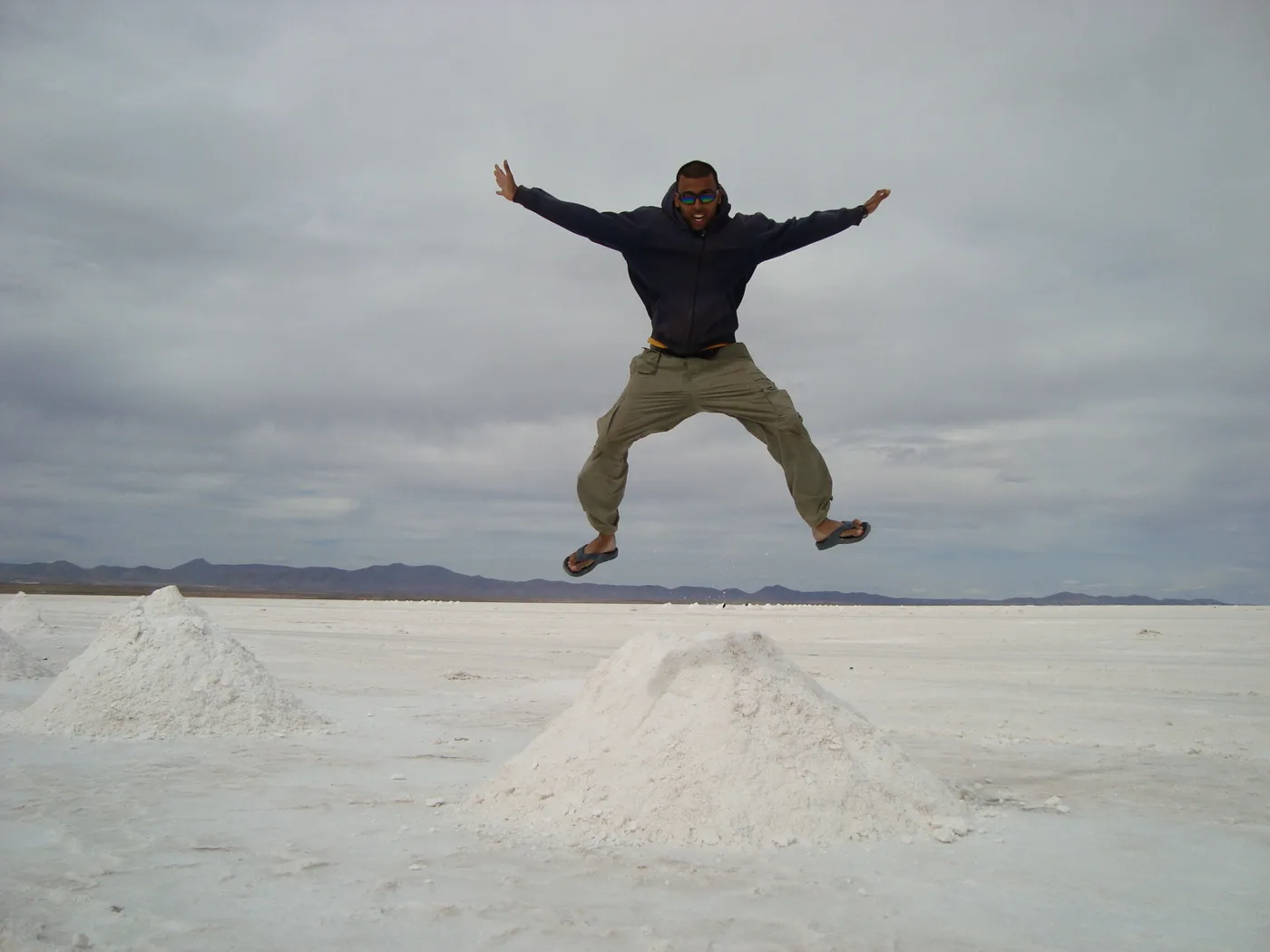
My original salt-flat photograph, published in the 20 July 2009 Uyuni diary. Publication date is not a verified capture timestamp. Original diary and photograph
In my diary published on 20 July 2009, the Uyuni trip begins with photographs and a list of landscapes: red and green lagoons, a cactus island, flamingos, snowy mountains and the salt flats. Yet the subject I spent most time writing about was not the scenery. It was discovering how limited my conversational Spanish became when I travelled with people who could keep a conversation moving beyond the familiar questions.
This October 2026 retrospective follows that original entry, titled The Flats. It was a multi-day 4x4 journey, with time in the vehicle between stops, but the post does not establish a dependable exact tour length. I am not turning it into a three-day itinerary, promising a modern route or assigning every photograph to a particular day.
Uyuni at eight in the morning
The first photograph in the post shows a brightly lit feature outside our hostel. Its caption contrasts the spectacle on arrival with seeing it the following morning while jogging at eight in freezing cold. That small note places running inside the travelling day without making it the main purpose of the trip.
It belongs beside my Bolivia marathon-training notes, where the running itself is described more fully. Here the surviving caption establishes a morning jog and the cold I recorded. It does not give a distance, a pace or a verified temperature.
I like the contrast in the original: something impressive on arrival became an ordinary landmark to pass while out running. The archive can preserve that shift without inventing a reflective sunrise scene or pretending I had a precisely mapped training route through Uyuni.
Most of the journey was in the vehicle
The diary is clear that we travelled between sights in a 4x4 and spent much of the time sitting down. We would stop, wander, take photographs and carry on. That is a different kind of movement from the walking and cycling in other South American entries.
The red and green lagoons, pink flamingos, cactus island and snowy peaks appear in the contemporary description. The train cemetery appears in a photograph and caption. I can name those things as scenes I recorded without inventing their order or claiming that every current tour includes them.
My younger prose also made broad claims about the salt flat’s scale and growth. Those are not the evidence I want this retrospective to rest on. The photographs and my account of moving between stops are firsthand material; a casual geographical assertion is not an independently checked measurement.
The salt-flat photograph
The original salt-flat image shows me airborne with my arms spread, pale ground below and a cloudy sky above. It is a playful travel photograph, not a measured jump, a sporting achievement or a demonstration of altitude tolerance. Its provenance is the owner-authored July post in which it appeared.
There is a particular usefulness in keeping the real image. A stock panorama could make the destination look grander, but it would remove the person and the joke from the diary. I was taking photographs while travelling; the awkward, energetic pose is part of that record.
I am not adding the original family portraits here. They are publicly accessible in the old post, but this new feature does not need to make travelling companions or a younger person more identifiable. The scenery and my own photograph can carry the story without introducing anybody else’s biography.
Spanish that worked until it did not
Before meeting the Chilean family I wrote about, I felt relatively capable in Spanish beside other English-speaking travellers. I could help with accommodation and the tour and knew more of the relevant words in that small group. My confidence was based partly on comparison.
With native speakers, that comparison changed. For a while I could talk about where I had been and where I was going. Then the familiar vocabulary ran out. The diary describes conversation continuing while I became quieter, unable to sustain the same apparent command of the language.
That is the most distinctive part of the entry. It is not a generic lesson pasted onto photographs of Bolivia. I actually chose to write about this gap between feeling competent and meeting a conversation that exceeded my vocabulary. The title points to the landscape; the paragraphs dwell on language.
Company without other people’s biographies
The trip included a family and a couple, and my original account describes their company warmly. It also includes names, occupations, ages and personal descriptions that are not necessary in a new feature about my journey. I have left those details out rather than treating public availability as a reason to amplify them.
The part that belongs to my own story is the changing conversation. I could participate, ask familiar questions and describe my travels; I could not keep doing that indefinitely at the pace of the group. I was still learning. That is enough detail to make the travelling companionship real without repeating somebody else’s private context.
I am not inventing dialogue in Spanish, a kindly reassurance or a moment in which everything suddenly clicked. The source gives a less tidy ending: I wanted fluency and recognised I had a long way to go. It does not give a language breakthrough on the last day of the tour.
A different Bolivia from the bicycle stories
My Death Road diary describes another Bolivia experience, built around a bicycle descent. La Senda Verde follows volunteering at the refuge. Uyuni belongs in the same travelling period, but neither of those chapters supplies missing details for the salt-flat journey.
Here the vehicle connected a series of views, and conversation filled some of the time between them. Keeping that difference matters. Adventure does not always mean a personal endurance test. Sometimes the revealing part is discovering that the confidence you brought into a conversation is smaller than the conversation itself.
Sources, dates and present-day limits
Read my original Uyuni diary, published 20 July 2009. The salt-flat photograph is the original image embedded there, not newly created scenery. The post’s date is the diary publication date; no exact departure date or duration is inferred here.
This retrospective is not current transport, road or tour advice. It does not guarantee access to particular lagoons, describe today’s vehicle conditions or offer a high-altitude safety plan. Follow the dated adventure archive for the other accounts, keeping each original source beside the later reflection. For Uyuni, the surviving story is already enough: cold morning running, the pale flats, photographs between stops, and the limits of the Spanish I thought I could command.
Field Notes: stories on doing hard things
New stories from ultras, selection prep, fight camps and building a business, when they're written. No schedule, no spam, unsubscribe any time.
By subscribing you agree to occasional emails. See the privacy policy.
I also run Pearl Lemon. If you need help with search, here's how I help with SEO consulting in London.