
Back to blogMarketing
Using Customer Testimonials To Boost Your Reputation, Your SEO and Your Bottom Line
25 April 2019by Deepak Shukla5 min read
DS
British-Indian founder of Pearl Lemon Group, based in Piedmont, Italy. I lead strategy and operations; specialists deliver client work.
Before you made your last online purchase, you probably read at least a few of the product reviews before you parted with your hard earned cash to help ensure you were making the right choice. Of course you did, everyone does, it's the only sensible thing to do. If you are going to spend tons of cash on a pair of high end headphones (for example) you want to make sure that they are worth their price tag.
For consumers reviews are vital when making purchasing decisions. But the same is also true for companies that buy a product or service from other businesses.
In business-to-business (B2B) marketing, testimonials carry a lot of weight in highly competitive markets. Before choosing which company to purchase from, B2B buyers spend a long time factoring in their their budgets, the product effectiveness, the vendors level of professionalism—and the testimonials of their peers.
Good B2B companies know how to talk up their products or services, touting how efficient and cost-effective they are. But customers don't want marketing babble; they want unbiased feedback from people they can relate to. They also want concrete figures and proof of results.
A good testimonial outlines key benefits, makes comparisons with other products, and backs up the claims you've made about your product or service. That's why many businesses choose to include a form of testimonial in their marketing. But some are more effective than others.
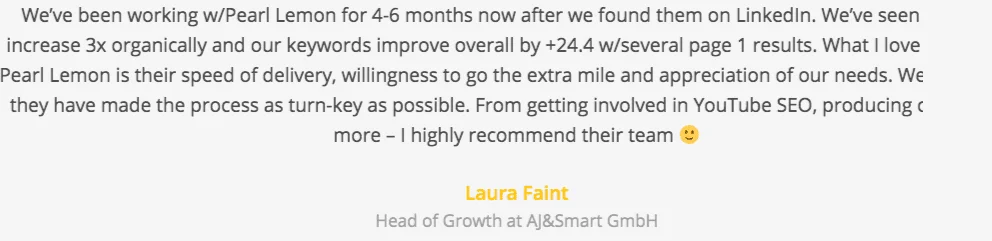 The simplest forms of testimonial are quotes and feedback from customers or clients about their experience with your firm or product. These can then be displayed on websites and social media pages andeven in emails and printed marketing materials.
In the age of goldfish level attention spans - very short in other words - the quotes should be short and snappy to catch attention immediately. The testimonial comments should usually give information about how customers found the process, how effective the service or product was, and whether they would recommend it to other businesses.
One benefit of displaying quotes is that they are relatively easy to get hold of: They just require contacting a few customers and politely requesting comments.
However, they may not always be as valuable and effective as other methods. Quotes could easily be embellished or made up, so they might not appear as trustworthy as other testimonial methods. Therefore, to make quotes seem as real as they actually are, include the person's name, company, other information, as appropriate.
The simplest forms of testimonial are quotes and feedback from customers or clients about their experience with your firm or product. These can then be displayed on websites and social media pages andeven in emails and printed marketing materials.
In the age of goldfish level attention spans - very short in other words - the quotes should be short and snappy to catch attention immediately. The testimonial comments should usually give information about how customers found the process, how effective the service or product was, and whether they would recommend it to other businesses.
One benefit of displaying quotes is that they are relatively easy to get hold of: They just require contacting a few customers and politely requesting comments.
However, they may not always be as valuable and effective as other methods. Quotes could easily be embellished or made up, so they might not appear as trustworthy as other testimonial methods. Therefore, to make quotes seem as real as they actually are, include the person's name, company, other information, as appropriate.
What the Research Says
Research backs up all the claims and advice that customer testimonials are effective. Testimonials beat all other types of content marketing for their effectiveness, WebDAM found:- 78% of people say they trust reviews as much as recommendations from acquaintances, and it's interesting to note that including both positive and negative reviews is perceived as more trustworthy than just positive reviews.
- Unsurprisingly, 30% of people suspected some form of censorship, so it's important to make testimonials appear as genuine as possible.
- Research also shows that not overwhelming your users is best, so picking only 3-5 examples is enough to provide an effective testimony.
Three Testimonial Types To Choose From
Quotes
The simplest forms of testimonial are quotes and feedback from customers or clients about their experience with your firm or product. These can then be displayed on websites and social media pages andeven in emails and printed marketing materials.
In the age of goldfish level attention spans - very short in other words - the quotes should be short and snappy to catch attention immediately. The testimonial comments should usually give information about how customers found the process, how effective the service or product was, and whether they would recommend it to other businesses.
One benefit of displaying quotes is that they are relatively easy to get hold of: They just require contacting a few customers and politely requesting comments.
However, they may not always be as valuable and effective as other methods. Quotes could easily be embellished or made up, so they might not appear as trustworthy as other testimonial methods. Therefore, to make quotes seem as real as they actually are, include the person's name, company, other information, as appropriate.
Case Studies
https://youtu.be/AlzcDwKG3g4 For digital B2B organizations, case studies are particularly powerful, as they showcase the results delivered to a previous client. These real-life stories should be informative and more in-depth than simple quotes. They could also include infographics or graphs showing results over time, or images and screenshots that detail the process. They should outline the background of the company that used your service, what problems it was aiming to address, why it chose your company, how they found the process of using your product or service, and what impact it had on the company and ROI.Videos
https://youtu.be/7Z6uz3q9zvQ For most of us, videos are a more impactful, believable, and memorable testimonial method than many others. You can see someone's body language and better gauge their emotions in videos, which are also more memorable and relatable. Most people are visual learners too, and so they prefer watching and listening over reading. Videos are also good for your website's bounce and conversion rates, which improve your SEO and ROI, respectively. There are some cons to videos, however. They can slow down your website, and they rely on people to click on them (if you haven't set up auto-play, which is not usually a good idea), and they might not watch the entire video. Many people might not bother, particularly if the video is not engaging in the first few seconds or if it's of poor quality. Another downside is that videos can be more time-consuming and expensive to produce, so they aren't the best option for everyone.How to Collect Testimonials
Surveys
One easy way to gain testimonial quotes is a simple and short survey, where you ask questions relating to the experience of the customer. You can take quotes from the responses—so long as you get permission to do so. You could also offer an incentive—for example, entry into a random prize drawing—for anyone who fills out the survey. Your survey can be sent via email. Ensure the questionnaire is not so long it overwhelms the respondent, and ask questions that would elicit quotable answers you can use.Existing Reviews
If you have a Trust Pilot, Yotpo, or Google account, you may already have reviews online. You could take those directly or approach the customers who wrote them for more feedback. If you're asking for further comments, don't be overly pushy.Using Someone Relatable
Ideally, you'll choose to quote people who will have a lot in common with your target audience. This will make them relatable to whoever is reading or listening, and those readers or listeners will trust the review more than they otherwise might.Not Being 'Salesy'
Being too salesy is a sure way to put off potential customers: They have come for some genuine feedback on the service, they don't want a sales pitch. So ensure that testimonials are direct from your customers or clients rather than having been penned by you for them. By the way, there is another big benefit to testimonials as well. When you ask a customer for a testimonial, you're proving that his or her opinion matters to you. That can goes a long way toward building a lasting relationship, and generating even more business as a result of it.Want me to look at your site?
Send me your URL and the one thing you'd most like to fix. I'll record a free 10-minute teardown of what I'd do first — no pitch.
Or read how I work on SEO consulting in London.